
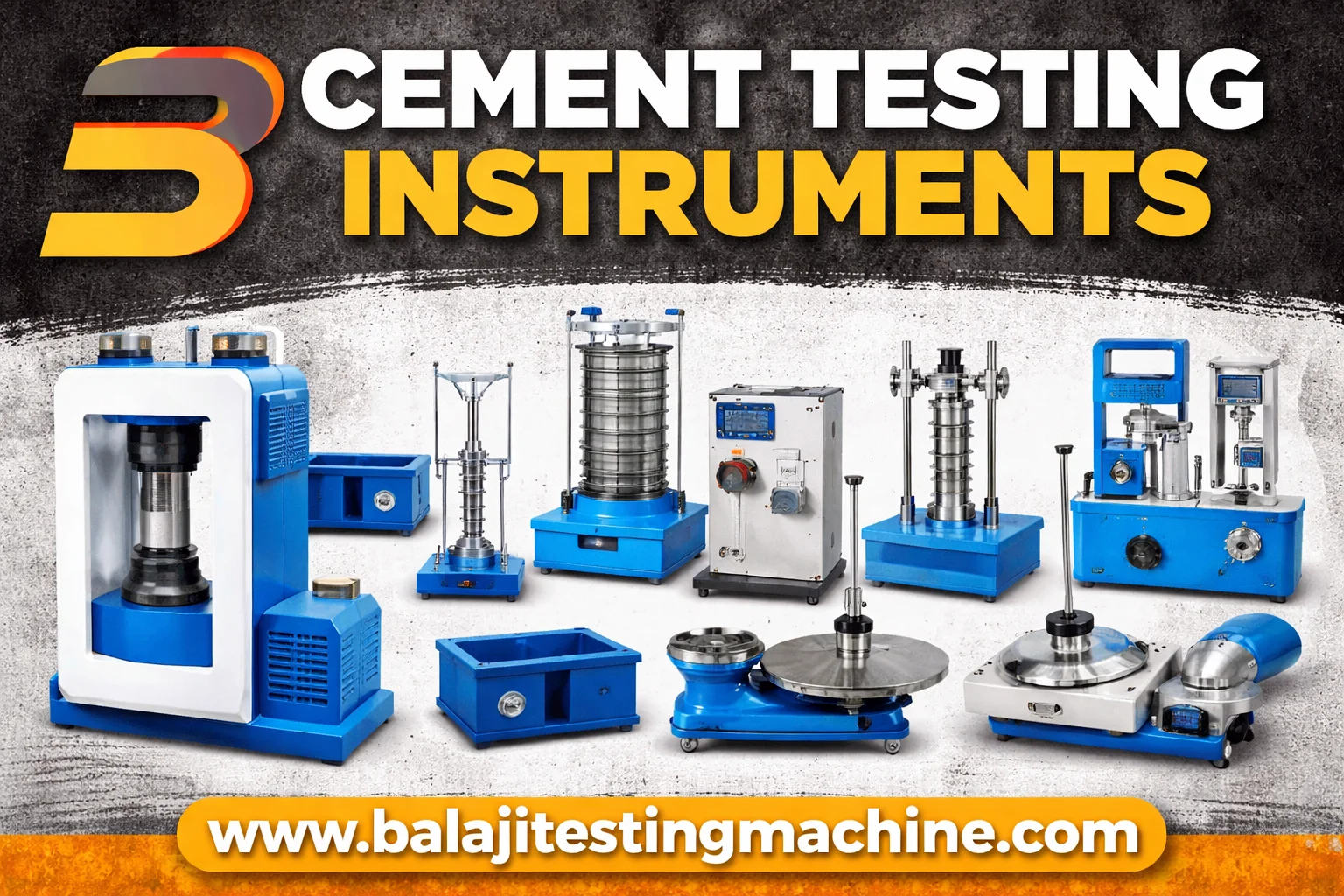
If you’ve ever set up or upgraded a testing lab, you know it’s not just about buying equipment; it’s about making the right decisions that affect accuracy, safety, and long-term costs.
And when it comes to Cement Testing Instruments, the risks are even higher. One mistake in readings can mean substandard construction quality, project delays, and in extreme cases, catastrophic failure of the structure itself.
So, the question is ‘how do you make the right decisions when choosing the right equipment without overcomplicating the process?’ Let’s make it simple and easy to understand without jargon and unnecessary details.
Start with What You Actually Need
Before you even look at brochures and prices, ask yourself what I actually need in my lab? Most likely, your lab will be running the following tests:
- Compressive strength
- Setting time
- Fineness
- Soundness
The most common mistake people make is trying to buy all the tools in one go. However, not all labs need all of them right from the beginning. For example, if you’re running a site lab, you might not need as much equipment as you would in a full-fledged lab.
Don’t Ignore IS Standards
If you’re in India, you know that government projects and other construction sites are not optional; they’re mandatory. Your equipment should be compatible with the IS 4031 standards so that your results are valid and acceptable:
- Government projects
- Third-party inspection
- Quality certifications
While it might be tempting to save money now and ignore this, remember that when your results are rejected, it’s not just money, it’s reputation and credibility that’s lost.
Manual vs Digital: Decide Based on Reality, Not Trends
The first and most obvious option is to go digital. It’s the latest and greatest. Who wouldn’t want that? But the harsh reality is that manual equipment is perfectly adequate for most laboratories.
- Manual equipment: inexpensive and reliable
- Digital equipment: precise and time-efficient
If your laboratory needs frequent testing or precise accuracy, then digital equipment is the way to go. However, if your lab is on a tighter budget and needs the basics, then manual equipment is the way to go.
Consider the Needs of Your Laboratory
Not all laboratories are the same. Some laboratories are small and don’t require the same level of quality and power that others might need. Therefore, it’s imperative to consider the needs of your laboratory.
For instance
- If your laboratory only needs to perform a few tests per day, then the device does not need to be heavy-duty.
- If your laboratory needs to perform constant tests per day, then the device needs to be sturdy enough to keep up with your needs.
Build Quality: More Than You Think
When it comes to testing equipment, the build quality is more important than one might think. The conditions in most laboratories are harsh. Therefore, the device chosen must be sturdy and well-built. In this regard, it’s imperative that the device chosen is resistant to corrosion.
Ease of Use Can Save Hours Every Day
This is something people usually realise after buying the equipment. If machines are complicated to use, your team will waste too much time figuring things out. This is something you don’t want. Look for:
- Easy to use
- Easy to read
- Easy to train
This is especially important in labs with constantly changing personnel.
Don’t Just Compare Prices, Compare Value
It is easy to be tempted by low prices. In fact, everybody does it. However, low-price equipment is often accompanied by other costs:
- Frequent maintenance costs
- Inaccurate readings
- Short lifespan
Don’t ask: What is the lowest price? Instead, ask: What will give me the best results over the next 5–10 years? This is what you can call real value.
After-Sales Support is a Game Changer
Have you ever thought about what happens after you buy it? Look for installation support, operator training and easy access to parts. Remember that even with top-quality equipment, things break. And if you don’t have easy access to parts, you can lose valuable time waiting for support.
Choose a Supplier You Can Trust
At the end of the day, it is not just the product you buy, it is also the supplier. Look for supplier experience, client reviews and product consistency. A good supplier is not just selling us equipment. They are helping us build a reliable testing setup.
Final Thoughts
Selecting the right Cement Testing Instruments is not about getting the best or the latest technology. It is about finding the right balance. In construction, experts at Balaji Enterprises know that quality starts with something much deeper than the bricks you lay. Quality starts in the lab. Quality starts with the decisions we make today.
Call Balaji Enterprises if you are looking for a trusted manufacturer and supplier of cement testing machines.