
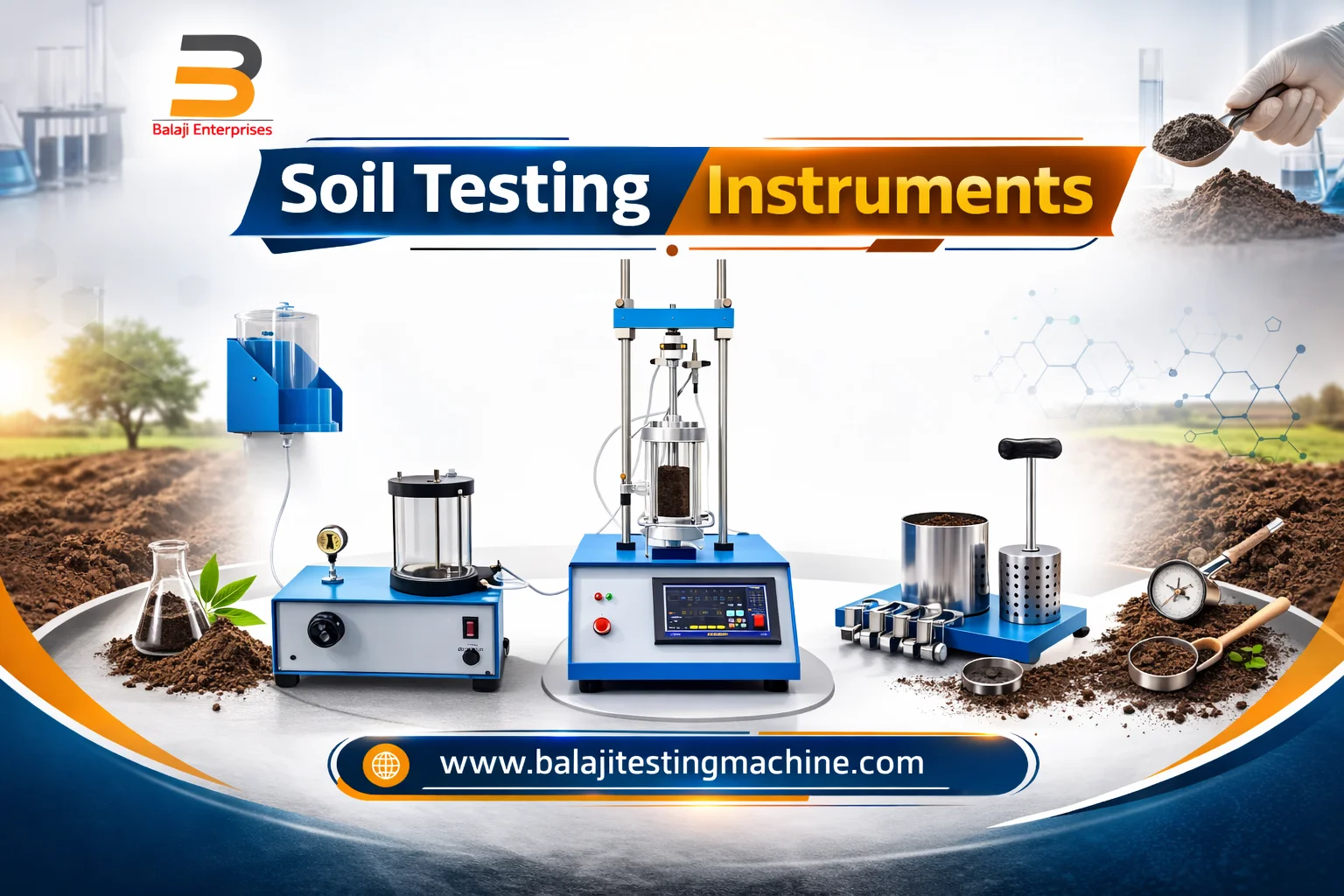
Most lab managers feel confident when they shop for any equipment, like a solid testing tool. They have experience using the equipment. They know what features they need and what not. They prepare a proper checklist and then set a budget. If everything goes well, they are able to purchase the right soil testing instruments.
However, if they are not serious, they may bring the wrong soil testing instruments that fail to handle local soil types. Maybe calibration takes three hours every morning. Many results don’t line up. Repeat tests give different numbers.
When that happens, the soil usually isn’t the problem, but the buying decisions are. At Balaji Enterprises, we have observed that some common mistakes are made repeatedly. Not because teams don’t care about quality, but because the wrong things get attention during purchase.
Let’s understand where labs usually slip.
Choosing Price Over Consistency
This is the most common one. Two machines look similar. But one costs less. In that case, buyers tend to choose the less expensive instrument. But when you test both the equiment, maybe you will notice small flaws.
-
- The load doesn’t apply evenly.
-
- Readings shift slightly between runs.
These small gaps can grow into big reporting issues. Labs end up repeating tests or defending results instead of moving forward.
So, costs do not mean better. Overpaying for features you’ll never use is just a different kind of mistake. The solution is to always match the equipment’s spec range to the soil types your lab actually tests. That’s the only number that matters.
Missing the Fine Print on Test Standards
Many labs assume equipment automatically meets standards. That assumption backfires. Soil tests depend on exact dimensions, loading rates, and procedures defined by BIS and ASTM. According to the USDA Natural Resources Conservation Service, soil properties vary significantly across regions, and equipment calibration must account for these differences.
Before buying, ask the vendor for data that shows performance across soil texture classes. If they can’t provide that, decline them.
Overlooking Calibration Complexity
Calibration sounds simple on paper, but it’s not always simple in practice. Some instruments need calibration every few hours during heavy testing days. Others drift quickly in humid storage conditions. Labs in tropical regions often find this out the hard way.
It is therefore important to ask vendors how long calibration takes.
-
- Ask if the process requires specialised reagents or trained staff.
-
- Ask what happens when a calibration fails mid-session.
The answers will tell you a lot about what daily lab life will actually look like.
Not Verifying Compliance Standards
This one is surprisingly common. A lab buys equipment, starts testing, then realises the machine doesn’t meet the compliance requirements for their specific reporting context.
Different applications call for different standards. Agricultural testing, environmental assessment, and construction projects often follow different protocols. So, check the compliance certifications before you buy.
Overlooking Quality and Finish
Soil testing involves water, pressure, and fine particles. If the equipment comes with poor finishes, it can rust, threads can jam, and accuracy can drop. Most users notice this after a year or two. By then, replacement feels inevitable. Build quality isn’t about appearance. It’s about test life. So when choosing soil testing instruments, focus on product quality and finish.
Considering Support as an Afterthought
Machines don’t operate alone. They need guidance. They need spares. They need quick answers. Labs often realise late that technical support matters as much as the machine itself. Delayed responses slow work. Missing parts stop testing.
So, find a well-known and reputed manufacturer and supplier of soil testing instruments like Balaji Testing Machine, where technical understanding supports the product, not just sales promises.
Bottom line
Buying soil testing equipment isn’t about filling a checklist. It’s about protecting your lab’s reputation. Before the next purchase, pause. Think about how the machine behaves after a year, not just on day one.
The buying process reveals a lot about your priorities. Labs that get it right tend to focus on total cost of ownership, not just sticker price. They ask hard questions early. And they treat the purchase as an ongoing relationship with a supplier, not a transaction.
The soil doesn’t change. The testing standards don’t change. The equipment needs to keep up with both.
Ready to make a more informed purchase? Talk to our testing equipment specialist who can walk you through the specs that actually match your lab’s workflow.
Frequently Asked Questions (FAQs)
No. Equipment should match the type of projects and tests the lab performs.
Accuracy. High capacity means little if results can’t be trusted.
Plan for roughly 10 to 15 per cent of the equipment cost to cover training, calibration supplies, and first-year maintenance.
Ask about calibration frequency, compatible soil types, warranty terms, service response time, and parts availability.
Sometimes. Multi-parameter instruments exist, but accuracy often drops when one machine tries to do everything. Dedicated instruments tend to perform better for high-stakes work.
Underestimating after-sales support. The machine is only half the equation.