
Ductility Test
- home
- Civil Engineering
- Bitumin & Asphalt Testing Eqipment
- Ductility Test
Ductility Test
Short Discription :
The ductility test for bitumen (also known as asphalt binder) measures the ability of the material to stretch or elongate without breaking under controlled conditions. This property is crucial for assessing the flexibility and cohesive strength of bitumen, which helps predict its performance in road pavements, especially in resisting cracking due to temperature changes or traffic loads. Bitumen with high ductility is more suitable for flexible pavements in varying climates, while low ductility indicates brittleness, often unsuitable for cold regions.
Standard Following :
IS 1208, ASTM D113, AASHTQ T 51
Brochure:
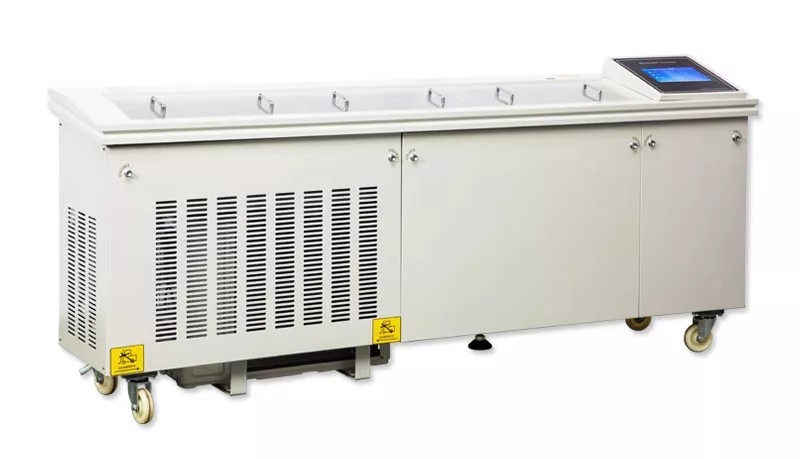
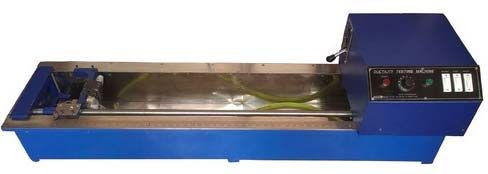
The ductility testing machine is designed to hold and pull three briquette samples simultaneously for efficiency and consistency. It maintains a uniform water bath temperature and ensures vibration-free operation. Key components include
COMPONENT | DETAIL |
Water Bath | Stainless steel tank with thermostatic heater, stirrer, and circulating pump to maintain homogeneous temperature (25°C). Often includes digital PID controllers/Thermostatic controller for precise control (±0.1°C). Refrigerated models are available for lower temperatures. |
Briquette Molds | Three brass molds (standard size per ASTM D113) to form the sample into a dumbbell shape (10 mm thick at center, 100 mm gauge length). Includes a base plate for casting. |
Pulling Mechanism | Motor-driven carriage with clips to grip mold ends, pulling at 10/50 mm/min speed. Three-unit models allow simultaneous testing. |
Measurement System | Ruler or digital scale to measure elongation (up to 100 cm or more). Advanced models have graphic displays for load-length graphs. |
Ductility is three types available.
BE 88-01 | Manual Thermostatic controller |
BE 88-02 | Digital Ductility PID controllers |
BE 89-03 | data logging software for recording results |
Nothing To Show
Nothing To Show